Comparison: VSD vs On-Off Compressors for Efficiency
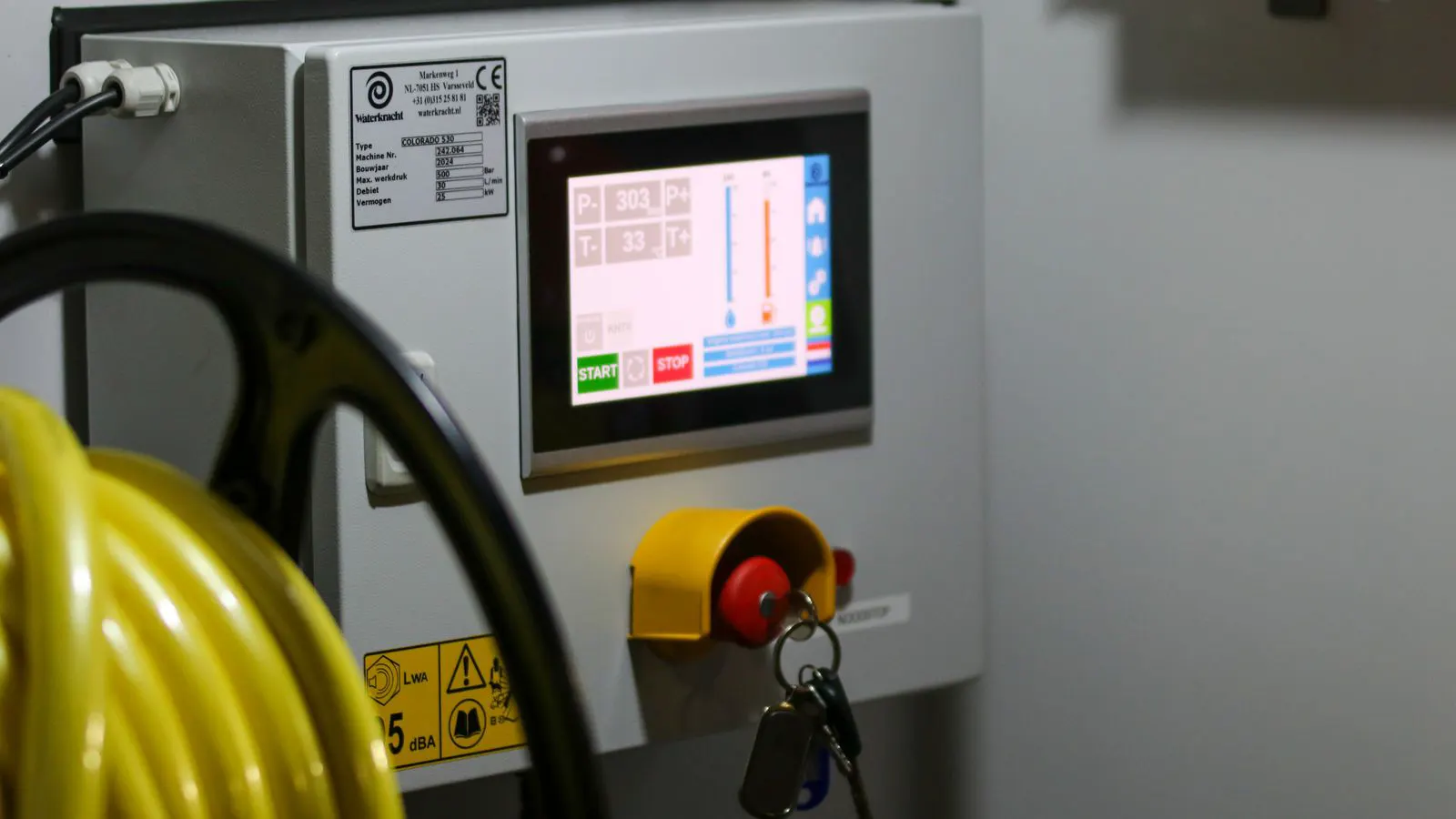
Variable speed drives match output to demand, reducing wasted cycling on on-off compressors. The best choice depends on whether your load stays steady or varies significantly throughout the day.
- VSD compressors lower energy use when demand fluctuates by matching pressure and speed to real-time consumption.
- On-off compressors work best only for small, stable loads with minimal variation and limited run time.
- A pressure differential set too wide on an on-off unit causes excessive short cycling and wasted power.
- Verify the specific control method and load profile before selecting the most energy-efficient machine.
- Combining VSD with a well-maintained receiver tank improves overall system stability and efficiency.
How the control method shapes energy efficiency
The energy efficiency of a compressed air system is determined less by the base motor rating and more by how the machine responds to demand. When a plant runs at a constant load, a fixed speed screw compressor can deliver steady pressure with predictable power draw. When demand fluctuates, the control method becomes the deciding factor.
An on-off compressor operates by switching the motor on when pressure drops below a set point and off when it reaches a higher set point. The unit cycles between full speed and zero. A variable speed drive, often abbreviated as VSD, uses an inverter to adjust motor speed in real time. The compressor slows down when demand is low and speeds up when demand is high.
The difference in energy use becomes significant over time. A fixed speed machine running at full speed to maintain pressure above the actual demand level wastes power. The excess air must be vented through a pressure relief valve. The on-off method avoids this by stopping completely, but it introduces thermal and mechanical stress from repeated starts and stops. VSD technology removes the need for venting and reduces cycling by keeping the motor running at a lower speed.
When on-off control is the better fit
On-off control remains a practical choice for specific operating conditions. The primary requirement is a steady, low demand profile. If a facility uses a small, consistent volume of air, the compressor will run almost continuously at a single speed. In this scenario, the efficiency penalty of VSD is minimal, and the lower capital cost of a fixed speed machine is attractive.
Small batch operations also suit on-off control. If a process requires air in short bursts separated by long idle periods, a fixed speed unit can cycle without excessive wear. The receiver tank smooths out these variations. The tank absorbs the pressure drop during a burst and supplies air during the idle period.
Limitations of on-off control appear when the load profile shifts. If the plant adds new equipment or changes production schedules, the demand may no longer match the original design. The compressor may cycle too frequently, or it may run at full speed for extended periods. Both situations increase energy use and reduce equipment life.
When variable speed drives outperform fixed speed
VSD compressors excel in environments where demand changes throughout the day. This includes facilities with multiple shifts, seasonal production peaks, or processes that vary in intensity. The drive matches the compressor output to the actual air consumption rate. If the plant uses 80 percent of its maximum capacity, the motor runs at a lower speed and draws less power.
The energy savings come from the relationship between airflow and motor speed. In a positive displacement screw compressor, reducing the speed reduces the volumetric flow rate. The motor power draw decreases with the cube of the speed ratio. This means that a small reduction in speed results in a significant reduction in power consumption. The VSD drive exploits this relationship to avoid the high energy cost of running at full speed when demand is low.
Variable speed control also improves pressure stability. The drive maintains a tighter pressure differential than an on-off unit can. This reduces the workload on downstream equipment and prevents pressure spikes that can damage sensitive processes.
Comparison of control methods for different load profiles
The table below summarizes the key trade-offs between on-off and VSD control methods. The choice depends on the specific load profile and operating conditions of the facility.
| Option | Best for | Limitations |
|---|---|---|
| On-off fixed speed | Small, steady loads with minimal variation; low budget installations | Wastes energy when demand drops; short cycling on wide differentials; higher wear from frequent starts |
| VSD screw compressor | Variable loads; multi-shift operations; high utilization; tight pressure requirements | Higher initial cost; requires proper tuning; drive maintenance adds complexity |
| Multi-screw with VSD | Large plants with high peak demand and low base demand | Complex control system; requires skilled commissioning; higher maintenance |
| Single VSD with large tank | Moderate loads with frequent small variations | Requires correct tank sizing to avoid excessive cycling; tank adds space |
| On-off with narrow differential | Stable medium loads where capital cost is the priority | Still cycles, causing wear; less efficient than VSD for variable loads |
Selecting the right method requires analyzing the actual load profile, not just the maximum demand. A facility may have a high peak demand but operate at 40 percent capacity for most of the day. In this case, an on-off unit will run at full speed for much of the time, wasting energy. A VSD unit will slow down and match the low demand, saving power throughout the day.
How receiver tanks interact with the control method
The receiver tank plays a critical role in both on-off and VSD systems. The tank acts as a buffer between the compressor and the plant. It absorbs pressure fluctuations and smooths out the load.
In an on-off system, the tank size determines the cycling frequency. A larger tank allows the pressure to drop further before the compressor starts, which reduces the number of cycles per hour. However, a larger tank also takes more space and requires more time to refill. In a VSD system, the tank still serves as a buffer, but its role is different. The VSD drive modulates speed continuously, so the tank does not need to absorb large pressure swings. A smaller tank may be sufficient, depending on the application.
The pressure differential setting on the control panel affects efficiency. For an on-off compressor, a wide differential, such as 10 to 15 percent of the working pressure, reduces cycling. A narrow differential increases cycling and wear. For a VSD compressor, the differential is typically set to a narrow range to maintain tight pressure control. The drive manages the speed to keep the pressure within this range.
Practical considerations for buyers
Buyers should avoid judging control methods based on nameplate efficiency ratings alone. The nameplate efficiency refers to the compressor at a specific speed and load. It does not reflect how the unit performs over a full day of variable operation. Two machines with identical nameplate ratings can have very different energy costs if one uses VSD and the other uses on-off control.
The load profile is the key variable. If the load is steady, the energy savings from VSD may be small. If the load varies, the savings can be substantial. A practical approach is to measure the air demand over a representative period. This can be done with a flow meter or by reviewing utility bills and production schedules.
Maintenance also factors into the total cost. VSD drives add an electronic component that requires periodic inspection. The bearings, belts, and seals still need routine service. An on-off compressor has fewer electronic components but experiences more mechanical stress from frequent starts and stops. The total cost of ownership should include both energy and maintenance.
How to verify efficiency claims before purchase
When evaluating a new compressor, buyers should ask the supplier for specific performance data. Request the efficiency curve at various load percentages, not just at full load. Ask how the control method handles low demand. For VSD units, confirm the minimum stable speed and the minimum load percentage at which the drive operates efficiently.
Check the pressure differential settings. For an on-off unit, ask what the manufacturer recommends for the specific application. For a VSD unit, ask how the control panel manages pressure and speed. A well-designed system will maintain pressure within a narrow band without excessive venting.
Review the warranty and service requirements. VSD drives may have specific service intervals. Ensure that the supplier or a local service provider can support the drive. A complex control system that is difficult to service may lead to downtime that outweighs the energy savings.
Final selection criteria
The decision between VSD and on-off control comes down to the load profile and the operating environment. For small, stable loads, an on-off compressor is a cost-effective choice. For variable loads, high utilization, or tight pressure requirements, a VSD screw compressor is generally more efficient. The energy savings from VSD are most pronounced when the machine operates below full load for a significant portion of the day.
Buyers should measure their actual demand before making a purchase. A detailed load profile analysis will reveal whether the energy savings justify the higher initial cost of VSD. In many industrial applications, the variable speed drive pays for itself through reduced energy bills within a few years of operation. The key is to match the control method to the real operating conditions, not to assume that the most expensive option is always the best.
Frequently asked questions
Can I install a VSD on an existing on-off screw compressor?
Some VSD drives are compatible with existing compressors, but the compressor must be rated for variable speed operation. The motor, control system, and cooling components must be suitable for the reduced speed.
What is the minimum load a VSD compressor can handle efficiently?
Most VSD drives operate efficiently down to a low single-digit percentage of maximum load. Below this point, the compressor may cycle on and off or the drive may lose efficiency. The specific minimum depends on the model and application.
Does a VSD compressor save energy if my load is constant?
If the load is constant and close to full capacity, the energy savings from VSD are minimal. The savings become significant when the load varies and the compressor spends time at reduced speed.
How large should the receiver tank be for a VSD compressor?
The tank size depends on the air demand and the desired pressure stability. A larger tank reduces the frequency of speed changes. For most applications, the tank is sized to handle a few seconds to a few minutes of peak demand.
Is VSD always more expensive to operate than on-off?
No. VSD is more expensive to operate when the load is high and constant. It is less expensive when the load is variable or low. The energy savings depend on the actual duty cycle.