How to Choose Air Compressor Filters and Dryers
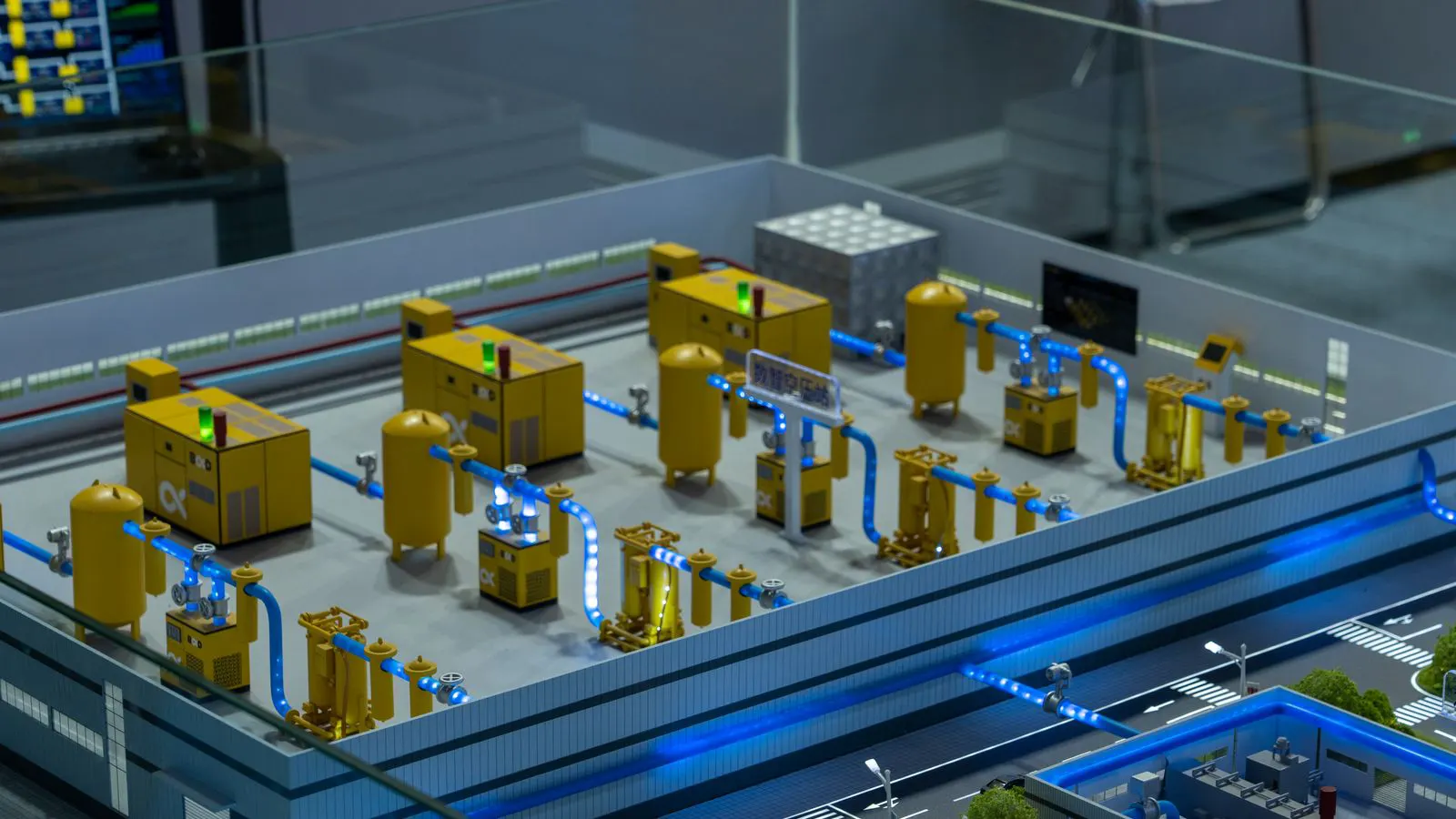
Choose air treatment by defining your required air quality, then select filtration and drying stages that match those specs. Match filter media to contaminants, size dryers for total flow, and verify performance with pressure gauges and dew points.
- Define your required air quality before specifying any equipment.
- Match filter media types to the specific contaminants in your air stream.
- Size dryers for your total system flow, not just one machine.
- Verify final air quality with a dew point gauge and pressure gauges.
Define Your Required Air Quality
Start by writing down exactly what your process needs from the air stream. This document is the single most useful tool in the entire selection process. Without a written air quality spec, you will end up guessing at filter grades and dryer capacity.
List every use point in your facility. Paint booths, powder coating lines, pneumatic tools, control panels, and food processing lines all have different tolerance levels. A paint booth requires near-absolute dryness and particle removal that a simple oil-free compressor cannot deliver on its own. A pneumatic tool line may tolerate some moisture, but it still needs oil and particulate removal.
For each use point, identify three things:
- The maximum allowable moisture level, usually expressed as a dew point.
- The maximum allowable particle size, usually in microns.
- Whether oil-free air is required for that specific application.
Write these values down. If you do not know them, consult the process equipment manufacturer. They will specify the air quality their machine requires. If a specification is missing, assume the stricter requirement and document that assumption.
This step prevents the most common and expensive mistake in compressed air systems: buying treatment equipment that is either over-specified or, worse, under-specified. Under-specification causes process failures, product defects, and premature equipment wear. Over-specification wastes capital and increases operating costs.
Assess Your Compressed Air System
Before you select any air treatment components, understand what you are starting with. Your industrial air compressors generate the base air stream, and every treatment device must handle the flow and conditions that stream presents.
Record the total flow in cubic feet per minute or standard cubic meters per hour. This is not the nameplate rating of one compressor. It is the sum of the flow from every compressor that feeds the main header. If your facility has two compressors and a load bank, the dryer must handle the combined output when all units are running.
Measure the discharge pressure at the compressor outlet. Most air treatment equipment is rated for a specific pressure range. A filter rated for 150 psig will not perform correctly at 200 psig because the pressure drop across the filter media will increase and the effective filtration capacity will drop.
Check the discharge temperature of your compressors. Oil-free compressors typically discharge cooler air, while oil-injected compressors can discharge air at temperatures that exceed 150 degrees Fahrenheit. This matters because oil-injected compressors require a coalescing filter stage before any dryer. The hot oil mist will damage desiccant media and clog fine particulate filters if it is not removed first.
Document the number and type of compressors in your system. A facility with a mix of reciprocating and rotary screw compressors has different air characteristics than one with only rotary screw units. The air from reciprocating compressors often contains more oil and particulate because of the mechanical design.
Select Filtration Stages
Filtration is usually the first stage of air treatment after the compressor. Its job is to remove particulate matter, oil mist, and, in some cases, water vapor before the air reaches the dryer.
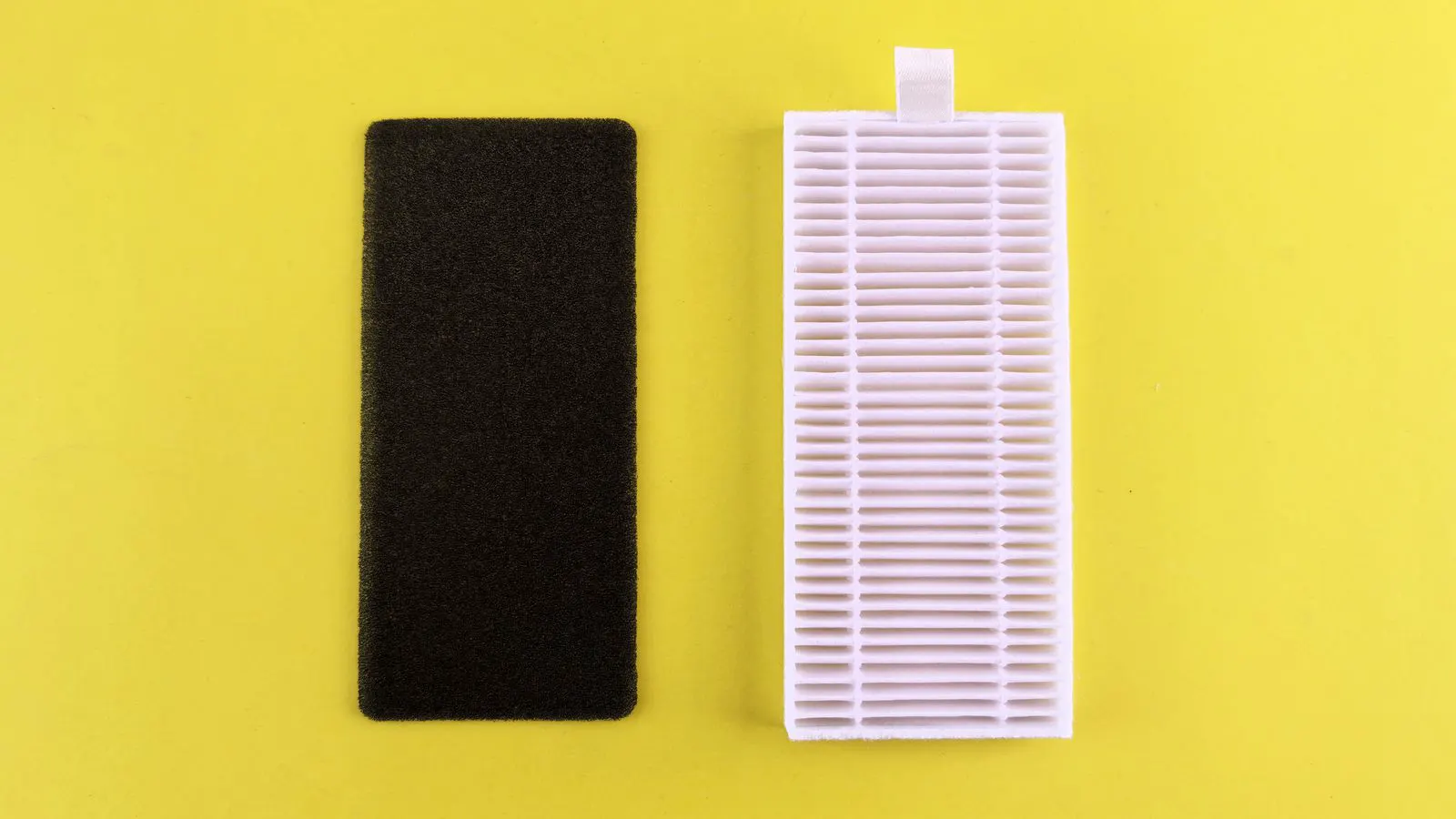
Most industrial air treatment installations use a multi-stage filter train. A typical train for an oil-injected compressor system includes a coalescing filter, a fine particulate filter, and, for higher quality applications, a carbon filter.
The coalescing filter is the workhorse. It removes oil mist and liquid water from the air stream. It uses a coalescing element that forces small oil droplets to merge into larger droplets that fall out of the air stream. The coalescing filter is usually rated for a specific oil removal efficiency, commonly expressed in percent. For most industrial applications, a coalescing filter rated for 99.9 percent oil removal is standard.
The fine particulate filter removes solid particles. The filter media is rated in microns. A 1 micron filter removes particles 1 micron and larger. A 0.01 micron filter removes much smaller particles. For most pneumatic tool and control applications, a 1 micron or 5 micron filter is sufficient. For paint booths or sensitive electronics, you may need 0.01 micron or 0.001 micron filters.
For applications that require oil-free air, such as food processing or pharmaceutical manufacturing, you may need a carbon filter stage. Carbon filters remove hydrocarbon vapors and odors. They are not a substitute for proper coalescing filtration. You must remove liquid oil and mist first, or the carbon media will saturate and lose its effectiveness.
The table below shows typical filter types and their primary functions.
| Filter Type | Primary Function | Typical Application |
|---|---|---|
| Coalescing Filter | Removes oil mist and liquid water | All oil-injected compressor systems |
| Fine Particulate Filter | Removes solid particles | Pneumatic tools, control systems, general industrial |
| Ultra-Fine Particulate Filter | Removes sub-micron particles | Paint booths, electronics, laboratory |
| Carbon Filter | Removes hydrocarbon vapors and odors | Food processing, pharmaceutical, sensitive manufacturing |
| Pre-Filter | Removes large debris and protects downstream stages | Facilities with unfiltered intake or dirty air conditions |
Match Filter Media to Your Contaminants
Not every filter media handles the same contaminants. Your selection must match the actual contaminants in your air stream.
If your facility uses an oil-injected rotary screw compressor, the primary contaminants are oil mist, fine oil droplets, and solid particulate from the compressor internals. The coalescing filter must be selected to handle the oil content of the specific compressor model. Different compressor designs produce different levels of oil carryover. A well-maintained unit may produce very little, while a worn unit or one with a failed oil separator will produce significantly more.
If your facility uses an oil-free compressor, such as a diaphragm or centrifugal compressor, the oil content is minimal or zero. However, these compressors can still produce particulate from the air intake or from internal components. A fine particulate filter is still recommended as a protective measure.
For facilities with high levels of dust or dirt in the intake air, a pre-filter stage is advisable. The pre-filter captures large particles before they reach the main filter train. This extends the life of the coalescing and fine particulate filters and prevents clogging.
Check the service life of each filter type. Coalescing filters typically have a service life measured in months or in a specific pressure drop threshold. Fine particulate filters have a similar rating. The service life depends on the actual contaminants in the air stream, not just the nameplate rating. A filter in a clean, controlled environment will last longer than one in a dusty, oily environment.
Choose the Correct Dryer Type
Drying is the process of removing water vapor from the compressed air stream. The dryer type you choose depends on your required dew point, your total flow, and your operating conditions.
Refrigerated dryers use a chilled water or brine coil to cool the air below its dew point. Water vapor condenses on the coil and drains out as liquid. They are the most common dryer type for general industrial applications because they are relatively simple and cost-effective. They can typically achieve a dew point in the range of 32 to 40 degrees Fahrenheit, which is 0 to 4 degrees Celsius.
If your application requires a lower dew point, such as below 20 degrees Fahrenheit or below 0 degrees Celsius, a refrigerated dryer will not be sufficient. In that case, you need a desiccant dryer.
Desiccant dryers use a desiccant material, such as silica gel or alumina, to absorb water vapor. The desiccant is regenerated either by a heat source or by a purge of dry air. Desiccant dryers can achieve dew points as low as minus 35 degrees Fahrenheit or minus 37 degrees Celsius. They are required for applications such as paint booths, powder coating, and sensitive electronics.
The choice between refrigerated and desiccant dryers is driven almost entirely by the required dew point. If you need a dew point above 20 degrees Fahrenheit, a refrigerated dryer is usually the right choice. If you need a dew point below 20 degrees Fahrenheit, a desiccant dryer is required.
Size your dryer for the total flow of your system. The dryer nameplate rating is in standard cubic feet per minute or standard cubic meters per hour. Match this to your total compressor flow. If your system produces 500 scfm and you only buy a 300 scfm dryer, the air will pass through the dryer too quickly and the dew point will be higher than rated.
Design the Air Treatment Train
Once you have selected your filter and dryer types, you must design the sequence in which they appear in the air treatment train. The order matters.
For an oil-injected compressor system, the standard order is:
- Aftercooler, to reduce the air temperature.
- Coalescing filter, to remove oil mist and liquid water.
- Fine particulate filter, to remove solid particles.
- Dryer, to remove remaining water vapor.
For an oil-free compressor system, the order is typically:
- Aftercooler, to reduce the air temperature.
- Fine particulate filter, to remove solid particles.
- Dryer, to remove water vapor.
The aftercooler is not strictly an air treatment device, but it is a prerequisite. It cools the air after compression, which increases the relative humidity and makes it easier to remove moisture in the drying stage. An aftercooler should be installed as close to the compressor outlet as practical.
If your facility uses a desiccant dryer, a second desiccant dryer is often installed in series. The first dryer removes the bulk of the moisture. The second dryer, called a polish dryer, removes the remaining moisture and achieves the final dew point. This two-stage arrangement is common for applications that require a very low dew point.
For applications that require oil-free air, a carbon filter is installed after the dryer. The carbon filter removes hydrocarbon vapors that may be present in the air stream. It is not placed before the dryer because the moisture would saturate the carbon media.
Verify Your Air Quality
After your air treatment train is installed and commissioned, you must verify that it is performing as specified. This is not a one-time check. Air quality degrades over time as filters clog and desiccant media saturate.
Install a dew point gauge at the point of use, not at the dryer outlet. The dew point at the dryer outlet is not the same as the dew point at the point of use. Pressure drop and temperature changes in the distribution piping can cause the dew point to rise. A gauge at the dryer outlet will show a lower dew point than a gauge at the end of a long run of pipe.
Use a calibrated dew point gauge. Do not rely on the built-in gauge in the dryer. It may be inaccurate or may be measuring the temperature of the air in the dryer housing rather than the air in the distribution line.
Check the pressure drop across each filter. A filter is clogged when the pressure drop reaches its rated limit. For a coalescing filter, this is typically when the differential pressure reaches 2.5 to 3 psi. For a fine particulate filter, it may be 2 to 3 psi. When the pressure drop reaches the limit, replace the filter. Do not wait for the filter to fail completely. A clogged filter increases the energy consumption of the compressor and can cause the compressor to work harder.
Keep a maintenance log for each air treatment component. Record the date of each filter change and the pressure drop at the time of change. This log helps you predict when the next filter change is needed and identifies any problems with the air stream.
If your air quality does not meet the specification, do not simply replace the filter. Check the entire system. A high dew point at the point of use can be caused by a clogged dryer, a failed desiccant bed, a leak in the distribution piping, or a compressor with a failed oil separator. A high particle count can be caused by a clogged filter, a dirty intake, or a failing compressor.
A common mistake is to assume that the air treatment equipment is working correctly because the compressor is running. The compressor produces air. It does not guarantee that the air meets the quality specification for your process. You must verify the quality.
If you find that your air quality is not meeting the specification, document the problem and the corrective action. This documentation is important for quality assurance and for understanding the root cause of any process defects.
Final Verification Checklist
Before you close out your air treatment project, run through this checklist. It covers the most common gaps and mistakes.
- The air quality specification is written and approved by the process equipment manufacturer.
- The total flow of the compressed air system is measured and documented.
- The discharge pressure and temperature of the compressors are recorded.
- The filter train is selected to match the contaminants in the air stream.
- The dryer type is selected to match the required dew point.
- The dryer is sized for the total flow of the system.
- A dew point gauge is installed at the point of use.
- A pressure gauge or differential pressure gauge is installed across each filter.
- A maintenance log is created for each air treatment component.
- The air quality has been verified against the specification.
If any of these items are missing, your air treatment system is not complete. The equipment may be installed, but it has not been verified. Verification is the step that separates a functioning system from a system that is simply present.
This process applies to any industrial air compressor installation. Whether you are adding a new compressor, replacing an old one, or upgrading an existing compressed air system, the air treatment selection follows the same logic. Define the requirement. Match the equipment to the requirement. Verify the result. That is the entire method, and it works every time.