Outlook: Sustainable Practices in Industrial Air Systems
This outlook identifies five key shifts in sustainable industrial air systems. It covers variable speed control, leak management, heat recovery, digital monitoring, and lifecycle planning to help buyers reduce environmental impact and operating costs.
- Variable speed drive adoption is the single largest lever for matching air supply to actual demand.
- Leak detection and pressure optimization reduce waste before capital investment is even required.
- Heat recovery and digital monitoring turn existing infrastructure into energy assets rather than liabilities.
- Buyers should prioritize lifecycle value and serviceability over initial purchase price when evaluating sustainable systems.
- Green manufacturing goals require coordinated action across maintenance, controls, and facility planning, not just hardware selection.
Compressed air is among the most energy intensive utilities in industrial facilities. Most plant energy audits identify the compressed air system as the top source of avoidable waste. The shift toward sustainable industrial air systems is not a marketing exercise. It is a direct response to rising operating costs, stricter environmental reporting, and the technical maturity of controls and monitoring tools. For buyers and engineers, the question is no longer whether to optimize the system, but how to sequence the improvements so they deliver measurable results.
What changes in demand management for air compressors
The most significant shift is the move away from fixed capacity operation. Older plants run compressors at full load even when demand fluctuates. This creates a mismatch between supply and consumption. Modern systems rely on variable speed drives to match compressor output to actual load. When demand drops, the drive slows the motor and reduces air production. When demand spikes, it accelerates to maintain pressure.
This change affects the entire mechanical and electrical design. VSD controllers require specific motor types, cooling considerations, and pressure setpoints. They also require regular maintenance of the drive electronics. The benefit is direct and immediate. Energy use follows demand instead of running at a fixed percentage of nameplate capacity. For facilities with variable production schedules, this alignment is the foundation of any sustainable industrial air systems strategy.
Consider a metal fabrication plant that runs two shifts. During the first shift, the cutting and welding lines draw a steady stream of air. During the second shift, the volume drops as the focus shifts to assembly and packaging. In a fixed capacity setup, the compressors run at full throttle throughout both shifts to maintain pressure. The excess air is vented through the unloading valve, wasting energy and generating heat. With a variable speed drive, the motor slows down during the second shift. The compressor produces only the air required by the assembly lines. This direct reduction in output correlates to a proportional reduction in electrical energy draw.
The integration of VSDs introduces new technical constraints. The drive must be matched to the motor’s voltage and current characteristics. The controller requires precise calibration of the pressure switch and the minimum pressure setpoint. If the setpoints are too close together, the compressor will cycle excessively, causing wear. If they are too far apart, the system will lose pressure before the drive can respond. Engineers must also verify that the cooling system can handle the reduced air volume. In fixed speed systems, the air cooler is sized for maximum throughput. In variable speed systems, the cooler must handle a variable range of heat rejection.
Maintenance of the drive electronics is another factor. The VSD cabinet contains power semiconductors, capacitors, and cooling fans that degrade over time. Regular inspection of the cooling airflow and inspection of the capacitor bank are standard practice. Ignoring these checks leads to drive faults that take the compressor offline. The reliability of the control system now dictates the availability of the air supply.
How leak management and pressure setpoints reshape operations
Before adding new hardware, most facilities need to fix the leak. Air leaks are the largest single source of waste in most plants. They are also the cheapest to fix. A leak at a fitting or valve wastes energy every second the system is running. The cost is invisible because it does not show up as a visible product or process failure.
Pressure setpoints matter equally. Many plants run at pressures higher than necessary. A process that requires 7 bar may be supplied at 9 bar due to historical settings or margin for error. Every bar above the required pressure increases energy consumption. The savings from lowering pressure are often larger than the savings from a single compressor upgrade.
The practical step is a structured leak detection program. Use ultrasonic detectors during normal operations. Identify and repair leaks in priority order. Set pressure controls at the lowest stable value that maintains process performance. Document the results. This creates a baseline that makes later efficiency improvements measurable.
Ultrasonic detectors convert the high frequency sound of escaping air into an audible tone that operators can hear. Small leaks, such as a pinhole in a hose or a loose compression fitting, produce a distinct pitch. The detector helps locate these sources quickly without shutting down the line. A common mistake is to focus only on the main piping. In reality, the most significant leaks are often found in the distribution network, at the points where hoses connect to tools, or at the unloading valves of the compressors.
Pressure optimization requires a detailed map of the facility. Engineers must identify the minimum pressure required at each major consumer. A paint booth, for instance, may require a specific pressure to atomize the paint correctly. A pneumatic cylinder may require less pressure to achieve the necessary force. Running the entire plant at a uniform high pressure wastes energy. By setting the system pressure to the highest minimum requirement, the compressor works against a lower back pressure. This reduces the energy required to compress the air.
The challenge is balancing pressure with system stability. If the setpoint is too low, the system may cycle frequently as demand exceeds supply. This causes wear on the unloading valve and the control solenoids. The goal is to find the lowest stable pressure that prevents cycling. This requires monitoring the pressure over a full operating cycle, not just a single snapshot.
Why heat recovery is becoming a standard design consideration
Compressors generate significant heat. In a traditional plant, this heat is rejected to the environment through cooling towers or air coolers. In a sustainable industrial air systems approach, that heat is captured and used. The recovered heat can preheat process water, support heating systems, or drive thermal processes.
The integration requires careful planning. The heat source must be stable and sufficient. The use must match the timing and quantity of the heat. A compressor that runs intermittently produces a pulsing heat output that is harder to use effectively. Piping, insulation, and heat exchange surfaces add cost and complexity. Maintenance of the heat recovery loop must be included in the facility plan.
For facilities with continuous load and existing thermal demand, heat recovery can turn a waste stream into a useful utility. The design must account for the thermal characteristics of the compressed air system, not just the mechanical components.
Heat recovery systems typically use a heat exchanger, often a plate type or a shell and tube design, to transfer heat from the compressed air or the oil to a secondary fluid. In many cases, the heat is extracted from the compressed air after the main dryer but before the final distribution. The air temperature drops, and the secondary fluid, usually water, heats up. This hot water can be used for domestic heating, process preheating, or to drive a steam generator.
The sizing of the heat recovery system depends on the compressor’s thermal output. A large reciprocating compressor may produce more heat than a screw compressor of the same displacement. The flow rate of the air also affects the heat transfer surface area. If the air velocity is too low, the heat transfer is inefficient. If it is too high, the pressure drop across the heat exchanger becomes significant.
Maintenance is a critical aspect. The heat exchanger can suffer from scaling or corrosion if the secondary fluid is not treated properly. The compressed air side can accumulate oil mist or condensate. Regular cleaning and inspection of both sides are necessary to maintain efficiency. The insulation of the piping must be checked periodically to prevent heat loss. Without this maintenance, the system may deliver less heat than designed, reducing the financial return on the investment.
What digital monitoring and predictive maintenance add to sustainability
Modern compressed air systems generate data that was previously unavailable or inaccessible. Pressure, flow, temperature, power draw, and vibration can be logged continuously. This data enables operators to see patterns that were missed in manual checks.
Predictive maintenance uses that data to identify degradation before failure. A slowly increasing energy draw per cubic meter of air may indicate worn components or a developing fault. A rising temperature in the oil circuit may point to a cooling issue. Catching these conditions early prevents unplanned downtime and maintains efficiency.
The data also supports sustainability reporting. Facilities can track energy use per unit of production and document reductions over time. This supports green manufacturing goals and environmental compliance. The monitoring system becomes part of the operational control loop, not just a reporting tool.
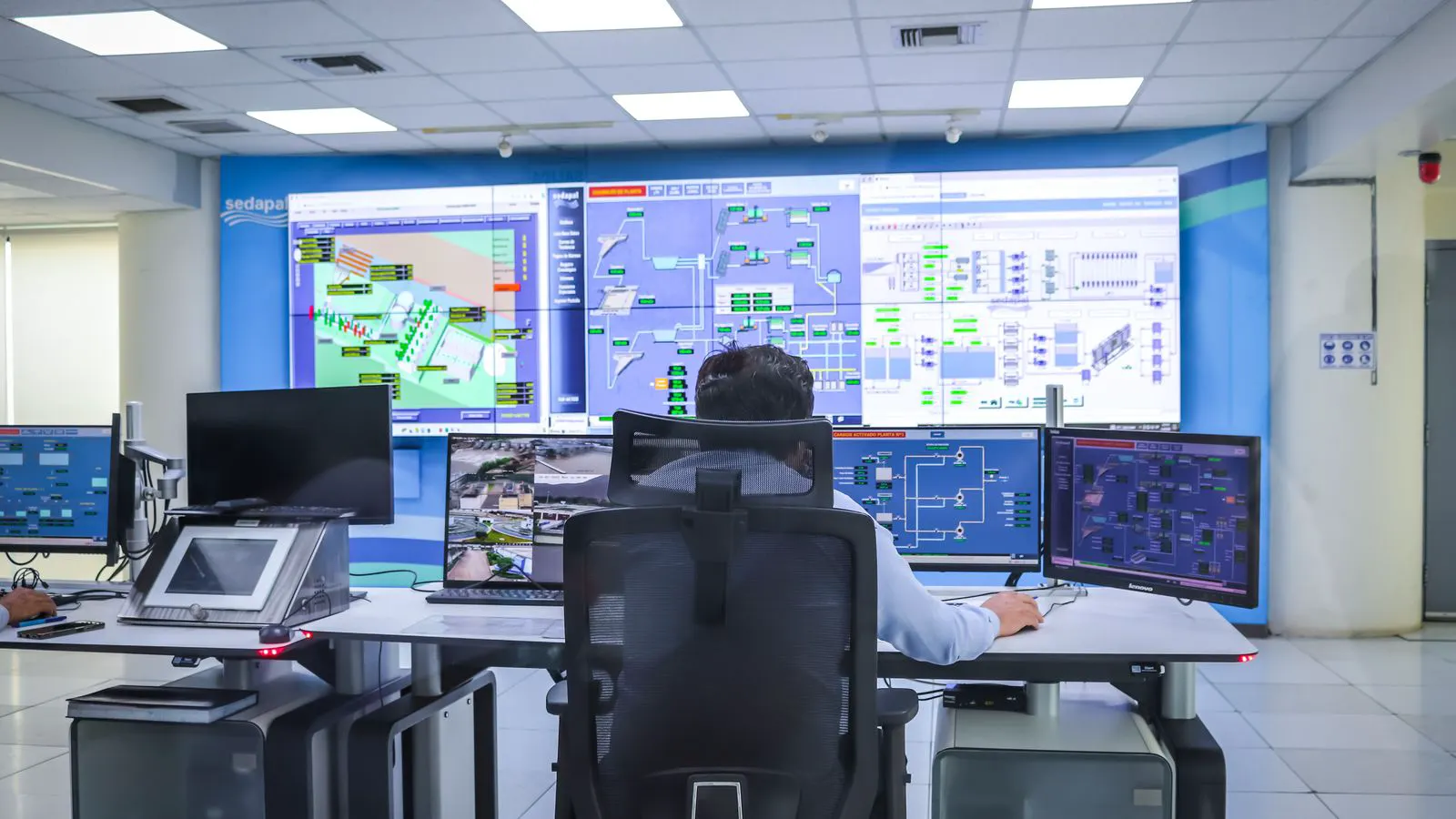
Digital monitoring involves installing sensors at key points in the system. Pressure transducers are placed at the compressor discharge and at the main distribution header. Flow meters, such as thermal mass flow meters, are installed to measure the volume of air consumed. Temperature sensors monitor the oil temperature and the air temperature in the dryer. Power meters record the electrical consumption of the compressor and the VSD.
This data is aggregated in a central software platform. The platform calculates key performance indicators, such as Specific Energy Consumption, which is the energy used per cubic meter of air produced. This metric allows for benchmarking over time. A sudden increase in this value may indicate a fault or an inefficient operating condition.
Predictive maintenance algorithms analyze trends in the data. For example, a gradual increase in vibration at the compressor motor may indicate imbalance or bearing wear. A rise in oil temperature may indicate a failing cooler or low oil level. By identifying these patterns early, maintenance teams can schedule repairs during planned downtime rather than reacting to a sudden failure. This reduces the risk of a catastrophic breakdown, which can lead to long production stops and costly emergency repairs.
The reporting capabilities of the monitoring system are also valuable. Facilities can generate reports on energy consumption, leak rates, and maintenance activities. These reports support internal sustainability goals and external regulatory requirements. The data provides a clear audit trail of the improvements made to the system.
How lifecycle planning changes the procurement conversation
Buyers historically focused on purchase price and nameplate capacity. That approach is no longer sufficient for sustainable industrial air systems. The total cost of ownership includes energy, maintenance, downtime, and end of life handling. A compressor that costs more upfront but uses less energy and lasts longer can deliver better value over its service life.
Lifecycle planning requires detailed data from the facility. The operating hours per week, the load profile, the required air quality, and the expected service life all affect the selection. The buyer should request energy performance data in standard units, not just horsepower or cubic feet per minute. The service terms and parts availability also matter. A system that is difficult to service or has limited parts support creates hidden costs.
The procurement document should include energy performance requirements, maintenance access, spare parts availability, and end of life disposal terms. The vendor should be able to demonstrate how the system meets those requirements. This shifts the conversation from hardware specification to total value.
When evaluating a new compressor, the buyer must consider the energy cost over the expected service life. A compressor with a higher efficiency rating may cost more to purchase but save significantly on energy bills. The difference in purchase price may be recovered within a few years of operation. The buyer should request a lifecycle cost analysis from the vendor, which includes the estimated energy consumption, maintenance costs, and replacement costs.
Maintenance access is another critical factor. The design of the compressor must allow for easy access to critical components, such as the oil filter, the air filter, and the unloading valve. If the maintenance requires specialized tools or extensive disassembly, the maintenance cost increases. The vendor should provide a maintenance schedule that aligns with the operating hours of the compressor.
Spare parts availability is also important. If a critical part is not readily available, the compressor may be offline for weeks. The buyer should request a list of critical spare parts and the expected lead times. The vendor should offer a parts support package that guarantees availability for the duration of the service life.
End of life disposal terms are often overlooked. The procurement document should specify how the compressor will be decommissioned and disposed of. The vendor should provide guidance on the recycling of the metal components and the proper disposal of the oil and other fluids. This ensures compliance with environmental regulations and reduces the environmental impact of the end of life phase.
What green manufacturing requires from the compressed air system
Green manufacturing is often framed as a plant level initiative. The compressed air system is one of the largest energy consumers on the site. Improving it directly supports the plant level goals. The changes are technical and operational. They require coordination between maintenance, engineering, and operations.
The practical path is staged. Start with measurement and leak correction. Then address pressure setpoints. After that, evaluate variable speed control and heat recovery. Finally, implement digital monitoring and predictive maintenance. Each stage builds on the previous one. The result is a system that operates efficiently, provides useful data, and supports the facility’s environmental commitments.
The shift is not about replacing every component. It is about making the system work as intended and recovering value from the energy and heat it produces. The most sustainable industrial air systems are those that are well measured, well maintained, and matched to the actual demand they serve.
Green manufacturing requires a holistic approach to energy management. The compressed air system is just one part of the larger picture. However, it offers some of the quickest wins. The integration of the compressed air system with the plant’s energy management system allows for real time optimization. For example, the energy management system can adjust the compressor operation based on the plant’s overall energy consumption and the cost of electricity. This dynamic adjustment ensures that the system always operates at the most efficient point.
The operational culture also plays a role. Operators must be trained to use the monitoring system and to respond to alerts. Maintenance teams must be prepared to implement the predictive maintenance recommendations. Engineering must be involved in the design and optimization of the system. Without this coordination, the technical improvements will not be fully realized.
The final outcome is a compressed air system that supports the plant’s sustainability goals. It consumes less energy, wastes less air, and generates useful heat. It provides data that supports decision making and compliance. It is designed for a long service life and is maintained to ensure reliability. This is the standard for sustainable industrial air systems in modern manufacturing.
Frequently asked questions
What is the fastest way to reduce energy use in a compressed air system?
Fix leaks and lower pressure setpoints to the minimum required by the process. These changes require no capital investment and often produce immediate savings.
Do all screw compressors benefit from variable speed drives?
Not all. Fixed capacity compressors are suitable for stable, continuous demand. Variable speed drives deliver the greatest benefit when demand fluctuates during the operating day.
Is heat recovery practical for small plants?
It is often practical when the plant has a continuous thermal load. The heat must be usable at the temperature and volume the compressor produces. Small plants with intermittent load may not have a suitable use.
How do I verify that a compressor is actually efficient?
Request the specific power consumption in kilowatts per cubic meter of air at your operating pressure. Compare that number against your current system and the proposed alternative.
What data should I collect before buying a new compressor?
Record the operating hours, average pressure, air flow, energy use, and leak rate. This baseline makes it possible to compare the performance of the new system against the old one.